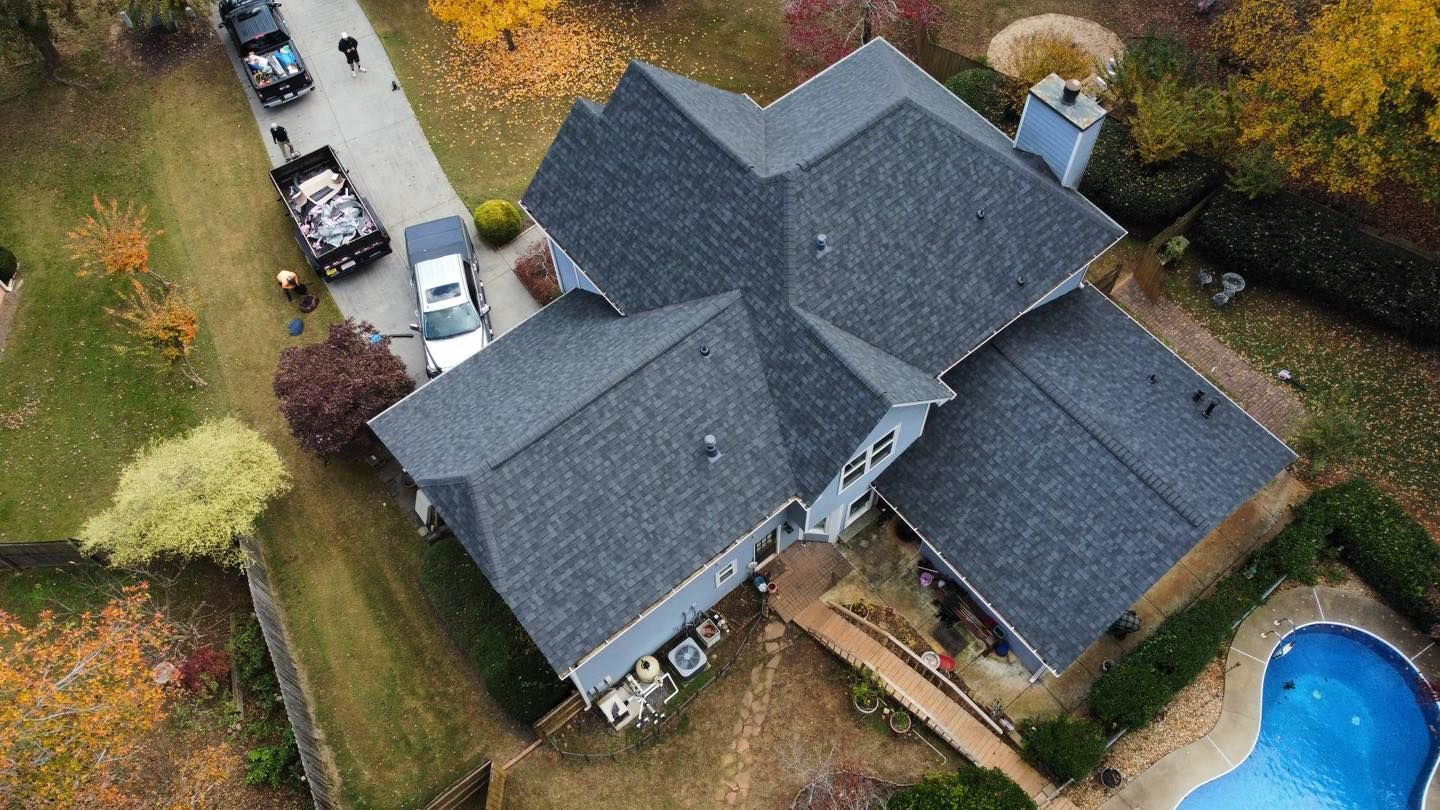
Most Siding Failures in Dawsonville Start with One Overlooked Detail
Why Generic Siding Installs Underperform in North Georgia's Wooded Environment
The most common siding mistake on Dawsonville properties isn't a wrong material choice — it's inadequate water management behind the cladding. When installers skip a continuous drainage plane or leave J-channel terminations unsealed at horizontal transitions, moisture from North Georgia's frequent rain events enters the wall assembly and has nowhere to exit. Dawsonville's heavily wooded lots near GA-400 and the Chattahoochee National Forest maintain elevated ambient humidity that prevents that trapped moisture from drying — which means wood rot, insulation saturation, and mold growth behind visually intact siding are common findings on homes that appear to need only cosmetic updates.
Painless Roofing and Water Restoration approaches siding services in Dawsonville by diagnosing what the existing exterior is actually doing before specifying a replacement material. Fiber cement siding installed over a continuous drainage mat with correctly lapped housewrap transitions creates a system that manages moisture even when surface water penetrates at joints — the difference between a 10-year repaint cycle and a 25-year one. Homes with mature tree canopy also face a sustained mildew load that accelerates paint failure and staining on wood and lower-grade vinyl products; fiber cement and engineered trim materials resist that biological growth in ways that traditional substrates cannot.
Choosing the Right Approach for Dawsonville's Specific Exposure Conditions
Properties near Lake Lanier's shoreline and those on Dawsonville's higher ridge elevations face meaningfully different siding demands. Lakeside homes deal with persistent moisture and increased wind-driven rain frequency, where tight panel locking and sealed penetrations determine whether the assembly holds up or begins admitting water within a few seasons. Ridge-line properties see greater UV intensity and thermal cycling, which causes lower-grade vinyl to expand and contract past its locking tolerance — panels begin to buckle, gaps open at seams, and what started as cosmetic waviness becomes a water infiltration path. Selecting panel thickness, expansion gap allowances, and fastening patterns based on actual site exposure rather than catalog defaults is what prevents those outcomes.
Soffit and fascia replacement completed alongside siding work eliminates the entry points that birds, insects, and moisture find in aging wood trim — a detail that Dawsonville homeowners with older homes discover matters as much as the wall cladding itself. Trim profiles matched to new siding create a unified exterior where no component is the weak link in the water management system. When the work is done correctly, the visible result is siding that lies flat with consistent reveal lines, trim that shows no paint failure at joints, and soffit venting that remains clear and functional rather than blocked by deteriorated material.
Evaluating your current siding's substrate condition before committing to a material selection avoids the cost of discovering hidden damage mid-project. Contact us today for siding services in Dawsonville and get an honest exterior assessment that identifies what your specific lot and home actually require.
How to Evaluate a Siding Proposal Before You Commit
Not every siding estimate covers the same scope — these are the decision points that separate a durable installation from one that fails ahead of its rated lifespan:
- Whether the proposal includes housewrap or drainage mat replacement, not just surface cladding — skipping this step on Dawsonville's moisture-heavy lots negates the durability benefit of any premium siding product
- How penetrations around windows, doors, and utility entries are detailed — improper flashing at these transitions accounts for the majority of water intrusion callbacks on siding projects
- Whether expansion gaps and fastening patterns match the specific material's thermal movement specifications for North Georgia's temperature range
- How soffit, fascia, and trim transitions are handled — leaving original wood trim behind new fiber cement or vinyl siding creates the first rot point in an otherwise sound installation
- What substrate inspection is included before new material goes on, since concealed sheathing damage found during installation changes scope and cost in ways that an upfront assessment prevents
A siding proposal that skips these details isn't necessarily less expensive — it typically generates the add-on costs and warranty disputes that homeowners were trying to avoid. Asking these questions before work begins is the single most effective way to control total project cost. Contact us today for siding services in Dawsonville and get a detailed scope that addresses every layer of your home's exterior, not just the surface you can see.